
AVOLYA – slimmed down. No excess baggage
Why “eat less, move more” is medically outdated
Obesity phenotypes and modern incretin therapy

As a licensed doctor, I see every day in clinical practice how deeply the stigma surrounding obesity is rooted in our society. People affected are still led to believe that a chronically elevated body weight is merely the result of a lack of willpower or undisciplined eating habits.
From a pathophysiological point of view, this dogma has long been untenable: obesity is a chronic, relapsing and multifactorial metabolic disease.
The renowned US research group led by Prof. Dr. Andres Acosta at the Mayo Clinic has systematically decoded this. Based on clinical assessments of gastric emptying, resting metabolism, hormonal satiety and behavioural patterns, four key pathophysiological phenotypes were defined. They show strikingly why obesity calls for nuanced precision medicine:1
Four phenotypes of obesity
-
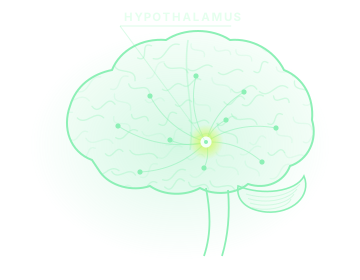
Phenotype 1 · Hungry Brain
The hungry brain
Central satiation disorder
Hypothalamus · Neuropeptides · Satiation
The “Hungry Brain” phenotype: the hedonic and homeostatic satiety centre in the hypothalamus signals that enough food has been eaten only after a delay. Those affected need a disproportionately large number of calories to reach adequate satiation (the onset of fullness during a meal). Mechanistically, this is often due to reduced central responsiveness to afferent neuropeptides.
-
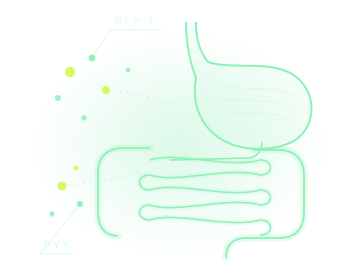
Phenotype 2 · Hungry Gut
The hungry gut
Accelerated gastric emptying & incretin deficiency
GLP-1 · PYY · Gastrointestinal axis
The “Hungry Gut” phenotype: here, the initial feeling of fullness sets in on time but fades again quickly (satiety – how long fullness lasts between meals). Accelerated gastric emptying and insufficient postprandial secretion of the body's own incretin hormones (such as GLP-1 and PYY) in the small intestine cause the gastrointestinal tract to signal neurohumorally that it is “empty” too early.
-

Phenotype 3 · Emotional Hunger
Emotional hunger
Hedonic eating
Dopamine · Reward system
The “Emotional Hunger” phenotype: here, eating acts as a compensatory mechanism for states of emotional tension. Neurobiologically, this is an imbalance in the mesolimbic dopamine system (the brain's reward pathway), in which behaviour is driven primarily by reward cues rather than by metabolic energy needs.
-

Phenotype 4 · Slow Burn
Slow metabolism
Reduced resting metabolism
Mitochondria · ATP · Resting energy expenditure
The “Slow Burn” phenotype: here, the measured resting energy expenditure (resting metabolic rate, RMR) is significantly below the value that would be expected based on lean mass, age and sex. This is not a “broken metabolism” but biological variation in mitochondrial efficiency and thermogenic activity.
In the Mayo Clinic studies, around 85% of patients had at least one of these phenotypes, and 27% even had a combination. What matters most for us as doctors: after 12 months, patients whose medication was precisely matched to their biological phenotype had lost an average of 15.9% of their body weight – compared with just 9.0% in a standardised control group.1
- 85 %
- with at least one phenotype
- 27 %
- with a combination
- 15,9 % vs. 9.0%
- Weight loss after 12 months, phenotype-guided vs. standard
A biological turning point: menopause and perimenopause
At AVOLYA, we pay particular attention to women in perimenopause and postmenopause. The physiological drop in oestrogen not only leads to autonomic symptoms, but also modulates lipolysis, promotes the redistribution of subcutaneous fat tissue towards metabolically highly active visceral fat, and lowers the basal metabolic rate through age-related loss of skeletal muscle mass (sarcopenia).
Women at this stage of life do not need one-size-fits-all diet advice, but an endocrinologically sound understanding of their changing body biology.
Tirzepatide & GLP-1 receptor agonists: my medical perspective
Often trivialised in the media as the “weight-loss injection”, the class of incretin mimetics – in particular dual GIP/GLP-1 receptor agonists such as tirzepatide – represents a genuine paradigm shift in metabolic medicine.
They mimic the body's own hormones, physiologically slow gastric emptying, quieten the tormenting “food noise” in the limbic system and synchronise hypothalamic perception of satiety. New data from the Mayo Clinic show that patients with certain metabolic subtypes (for example, with reduced native incretin release) respond particularly strongly to these active ingredients – in some cases with weight loss doubling.2
Nevertheless, medical responsibility dictates:
- No one-size-fits-all therapyPharmacological intervention requires a careful assessment of the indication, screening for contraindications (including ruling out MEN-2 or a history of pancreatitis) and preliminary laboratory tests.
- Close medical supervisionDose escalation must be titrated individually and adjusted to side effects.
- Holistic approachMedication is the biological tool that breaks the vicious circle. Lasting transformation and preserving metabolically active muscle mass also require a targeted supply of protein and micronutrients alongside evidence-based lifestyle changes.
At AVOLYA, we combine the latest pharmacological research with humane, discreet care from licensed doctors – for a healthy weight and lasting lightness.
References
- Acosta A, Camilleri M, Abu Dayyeh B, et al. Selection of Antiobesity Medications Based on Phenotypes Enhances Weight Loss: A Pragmatic Trial in an Obesity Clinic. Obesity 2021;29:662–671 (with subsequent correction).
- Mayo Clinic, Acosta research group: genetic risk score for the “Hungry Gut” phenotype and response to semaglutide (19.5% vs. 10.0% weight loss after 12 months). Conference presentation, Digestive Disease Week 2024; not yet published in a scientific journal.